
Swimming Tool Reverse Engineering
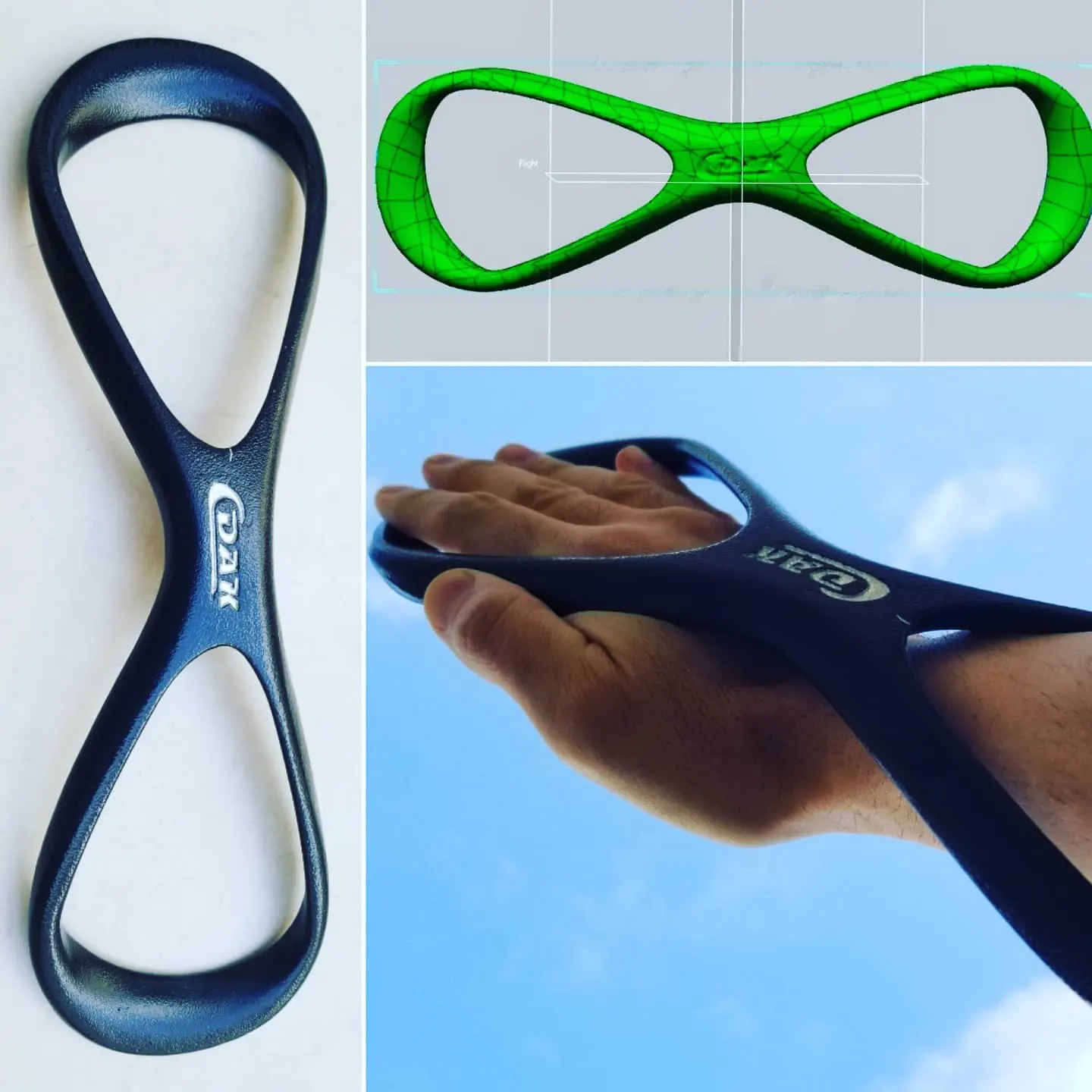
This swimming tool reverse engineering subproject focused on capturing an ergonomic object designed for hand interaction. Unlike rigid mechanical parts, the geometry is driven by human use. Therefore, the reconstruction required accurate surface continuity and correct proportions. The workflow follows the same principles used in building documentation, but applied to product geometry with organic form.
Swimming Tool Reverse Engineering as Ergonomic Reconstruction
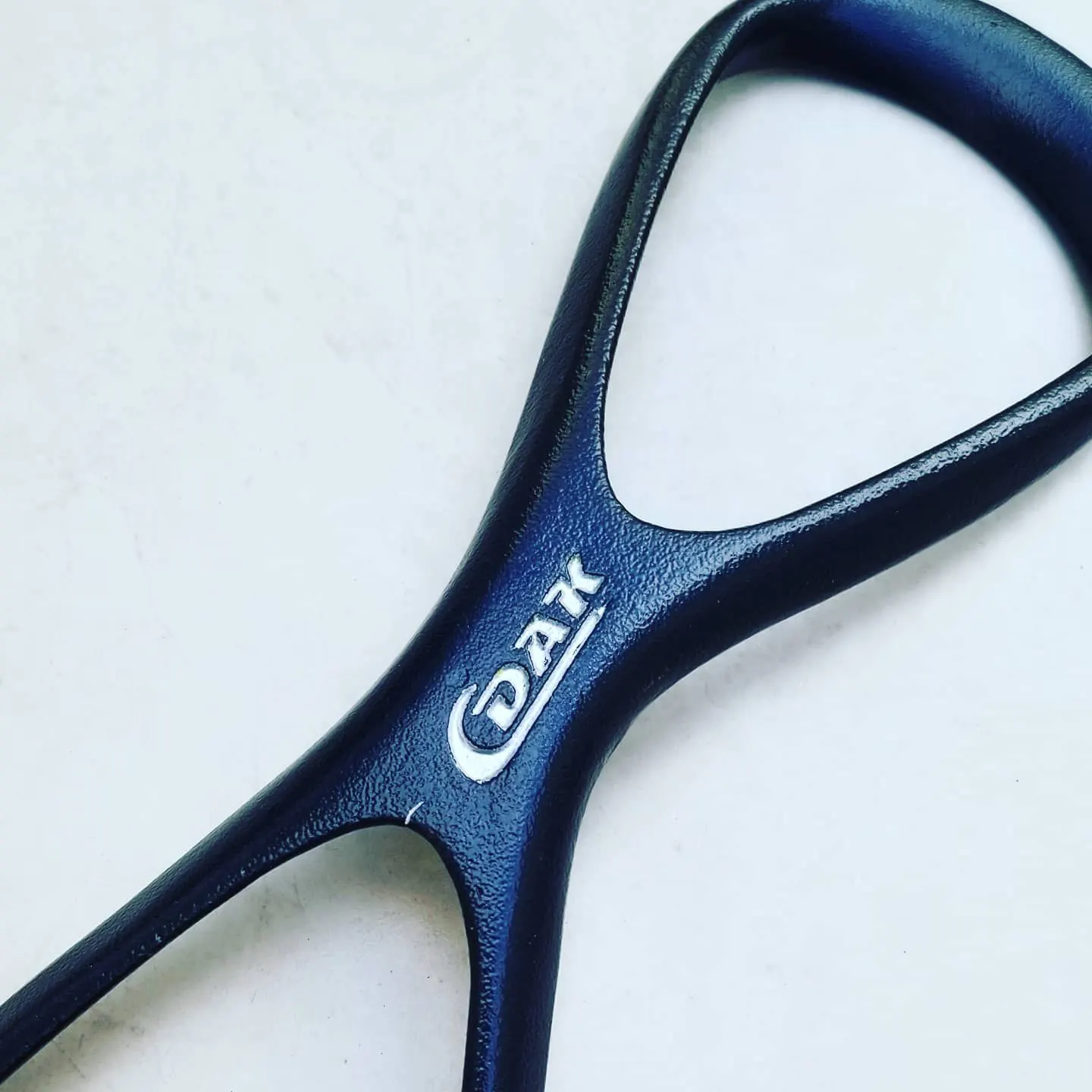
The object combines smooth transitions with a continuous loop structure. First, we captured the outer surface. Then, we analyzed the grip zones where the hand applies pressure. As a result, the swimming tool reverse engineering process required maintaining both shape continuity and ergonomic intent.
Geometry Characteristics
- Continuous loop without sharp edges.
- Smooth transitions between grip areas.
- Symmetry combined with local asymmetry.
3D Scanning of Smooth Organic Surfaces
Smooth objects require stable scanning conditions. First, we ensured consistent coverage of the entire surface. Then, we aligned multiple scans to avoid distortion. In addition, we checked curvature transitions to maintain accuracy. As a result, the dataset preserved both macro shape and fine surface quality. This approach aligns with our 3D scanning workflows and structured building measurement logic.
Scanning Focus Points
- Maintaining smooth curvature across the loop.
- Avoiding noise on reflective surfaces.
- Ensuring consistent mesh density.
Surface Reconstruction and Topology Control
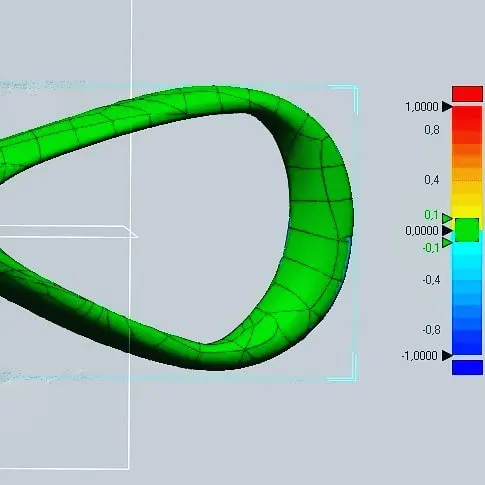
After scanning, the model required surface reconstruction. First, we cleaned the mesh and removed artifacts. Then, we rebuilt the surface to achieve continuity. Moreover, we adjusted topology to avoid irregular deformation. As a result, the final model behaves predictably in downstream processes.
Reconstruction Strategy
- Maintain continuous surface without breaks.
- Control curvature in ergonomic zones.
- Ensure stable topology for further use.
Preparation for Reproduction and Manufacturing
The reconstructed geometry can be used for reproduction or modification. First, we validated proportions against the original object. Then, we prepared the model for manufacturing workflows. As a result, the object can be reproduced with consistent geometry. This connects directly to our 3D printing capabilities and reverse engineering pipeline.
Application in Product Analysis and Design
Ergonomic tools are often difficult to redesign without reference geometry. However, reverse engineering allows capturing existing solutions. Therefore, designers can analyze grip efficiency and shape behavior. This approach is similar to scan-to-BIM, where existing conditions define the model. For similar tasks, see our contact page.
Project Summary
Object: ergonomic swimming training tool for hand resistance.
Process: 3D scanning, surface reconstruction, and geometry refinement.
Result: clean digital model ready for reproduction and analysis.
Project FAQ
Why is swimming tool reverse engineering different from mechanical parts?
Because the geometry is driven by ergonomics rather than strict dimensions, which requires careful surface reconstruction.
Can smooth surfaces be scanned accurately?
Yes. However, they require controlled scanning and careful alignment to avoid distortion.
Is the ergonomic shape preserved during reconstruction?
Yes. The process focuses on maintaining curvature and proportions that define usability.
What is the final model used for?
The model can be used for reproduction, modification, or product analysis.