
Sneaker Sole Reverse Engineering
This sneaker sole reverse engineering subproject focused on capturing and reconstructing a complex sole geometry for reproduction. Unlike simple objects, a shoe sole combines structural shape with a detailed surface pattern. Therefore, the task required both accurate geometry reconstruction and precise replication of the tread. The work supports building documentation workflows adapted to product geometry and complements our reverse engineering cases.
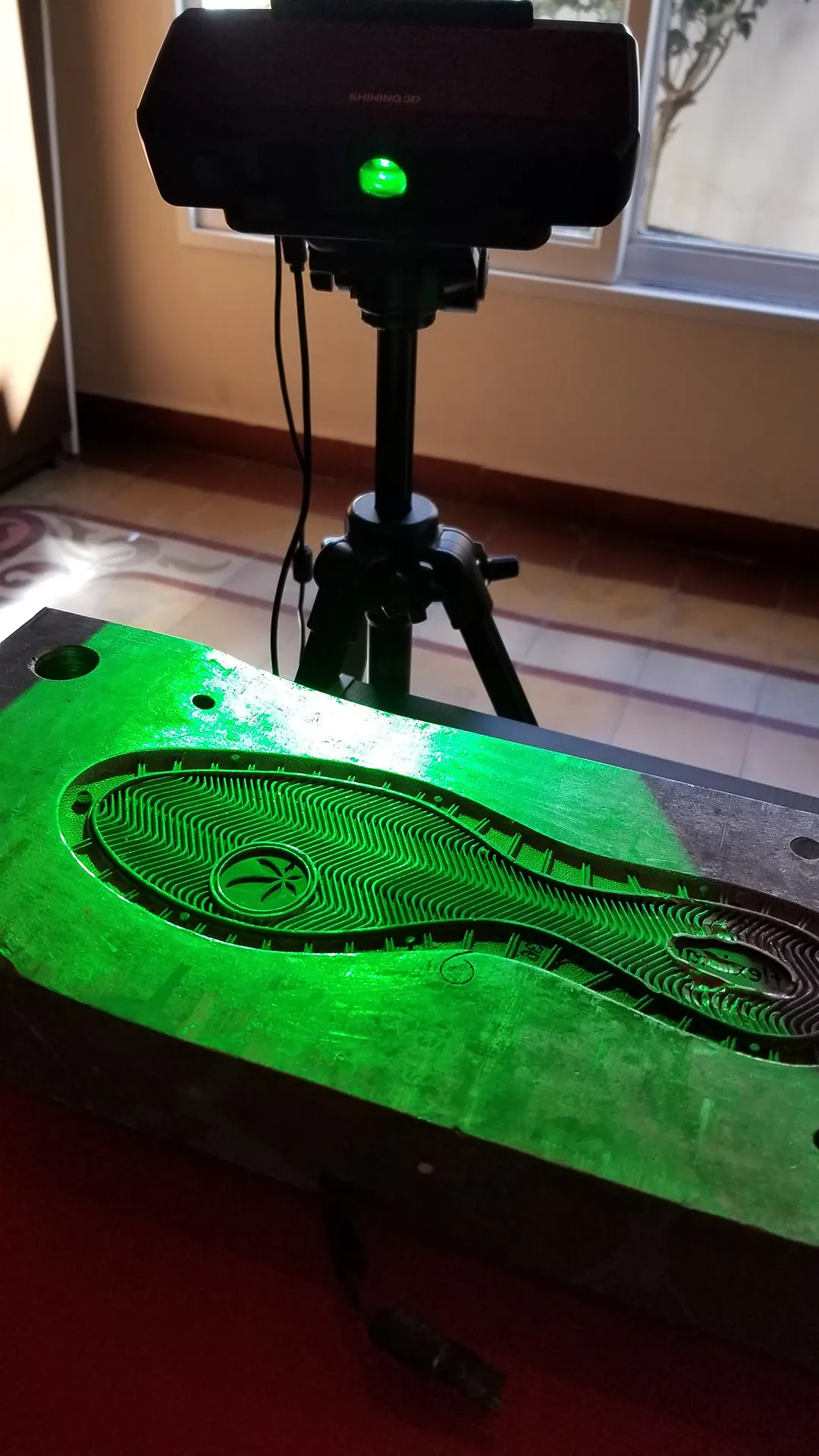
Sneaker Sole Reverse Engineering as Surface + Pattern Task
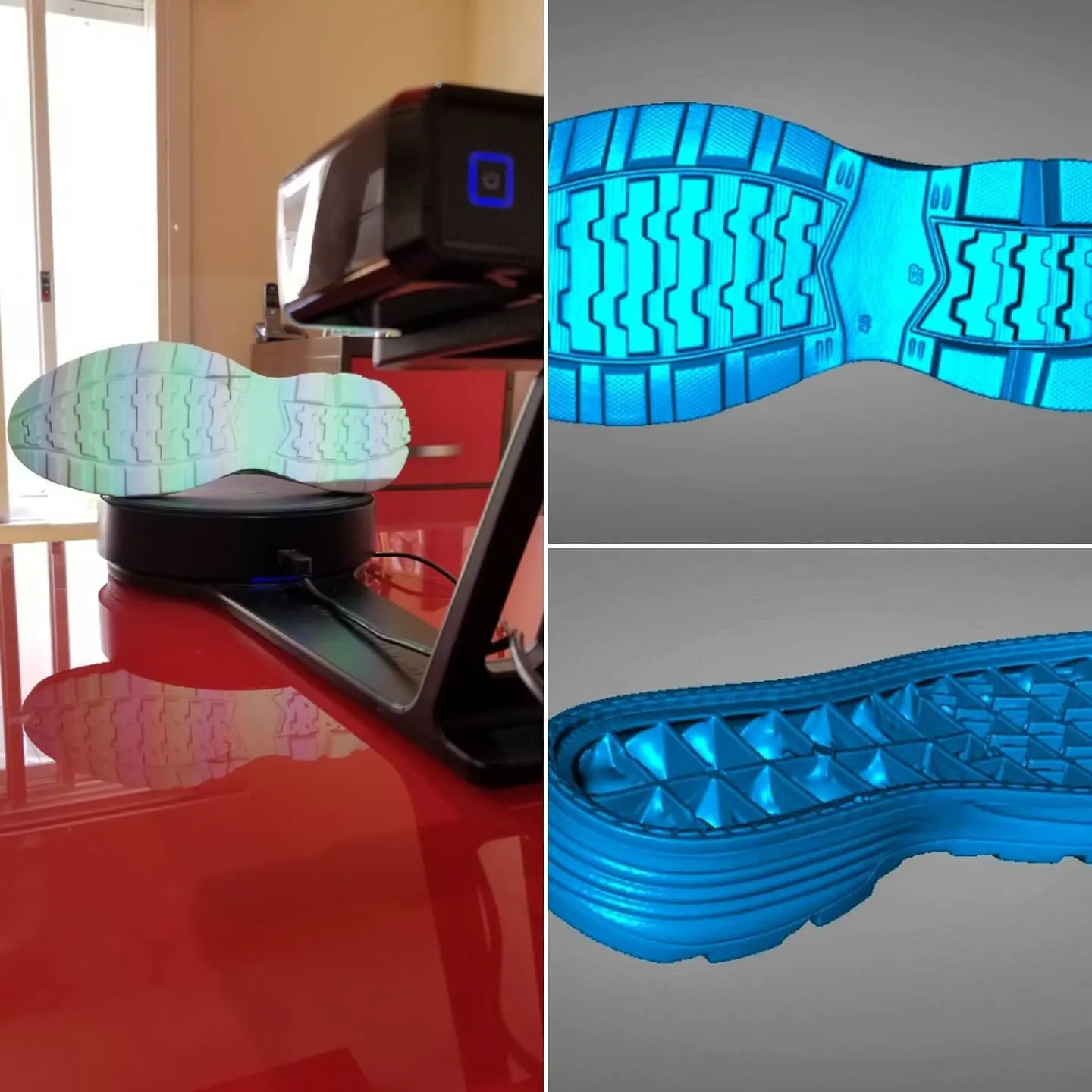
A sole is not only a volume. Instead, it is a combination of macro shape and micro pattern. First, we captured the global curvature of the sole. Then, we focused on the tread details that define grip and wear behavior. As a result, the sneaker sole reverse engineering process required balancing both levels of geometry.
Key Characteristics of Sole Geometry
- Continuous curvature adapted to foot shape.
- Detailed tread pattern with repetitive elements.
- Functional zones with different surface behavior.
3D Scanning of Complex Patterned Surfaces
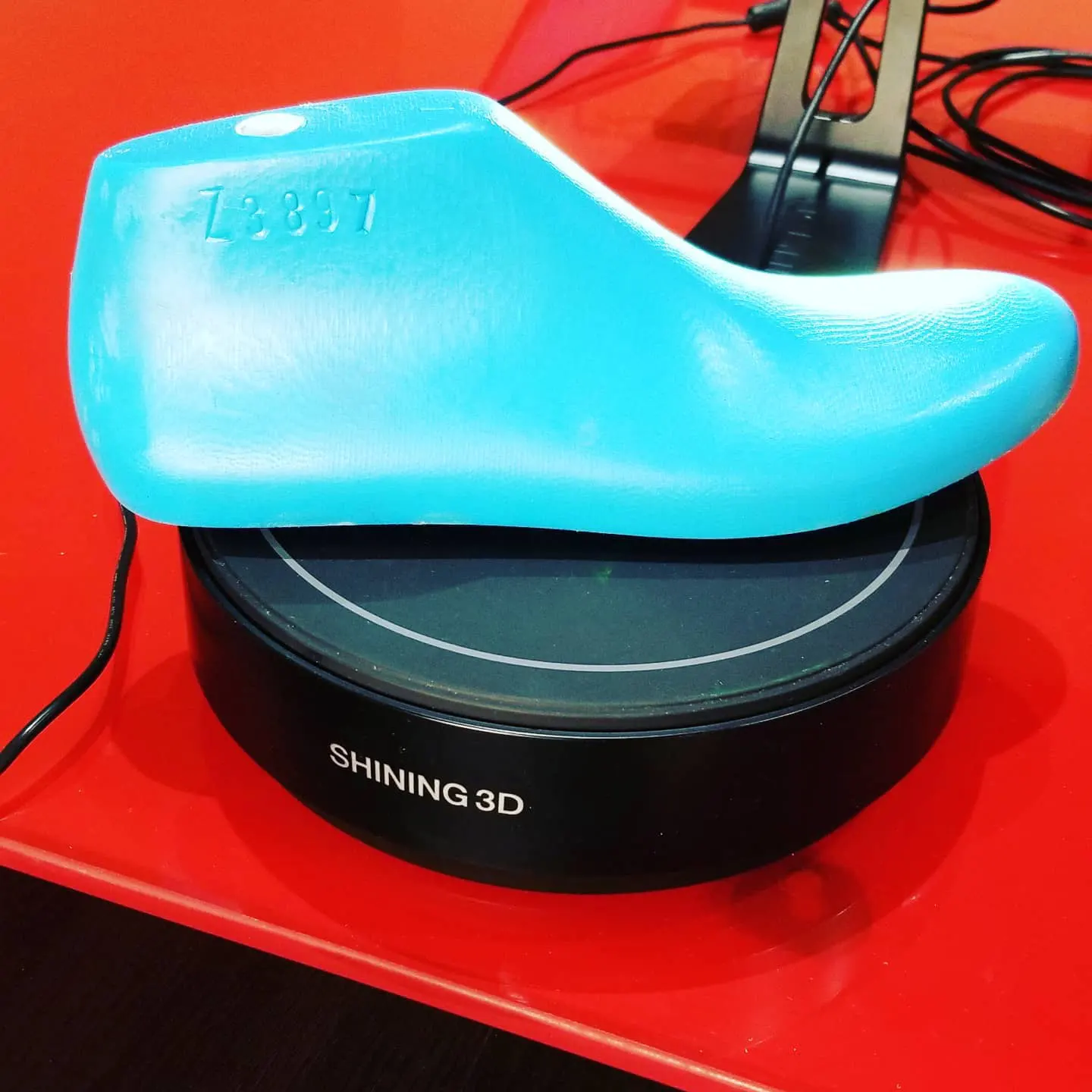
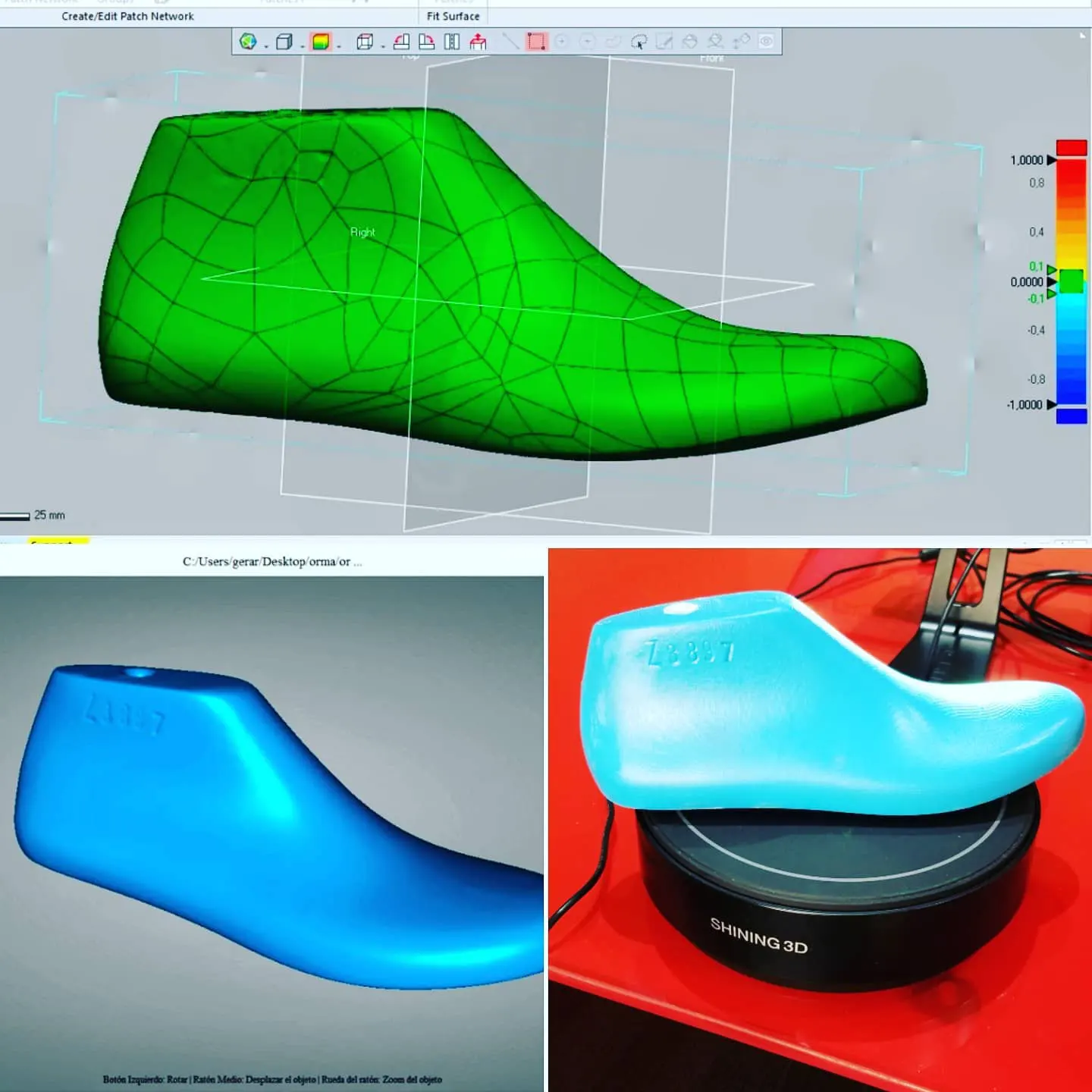
The scanning stage required stable data acquisition across both smooth and structured areas. First, we captured the sole from multiple angles. Then, we ensured that small features were preserved during alignment. In addition, we checked transitions between flat and patterned zones. As a result, the dataset provided a reliable base for reconstruction. This workflow is aligned with our 3D scanning approach and precise building measurement techniques.
Scanning Challenges
- Capturing fine tread without noise.
- Maintaining consistency across curved areas.
- Aligning scans without pattern distortion.
Reconstruction of Wear-Affected Geometry
Used soles often contain worn or compressed areas. Therefore, we did not rely on the raw scan alone. First, we analyzed symmetry and repeating structures in the pattern. Then, we restored missing or degraded elements. Moreover, we corrected distortions caused by use. As a result, the reconstructed model represents the intended geometry rather than the worn condition.
Reconstruction Strategy
- Restore repetitive pattern elements consistently.
- Smooth transitions between functional zones.
- Preserve original proportions and alignment.
Mold Preparation for Sole Production
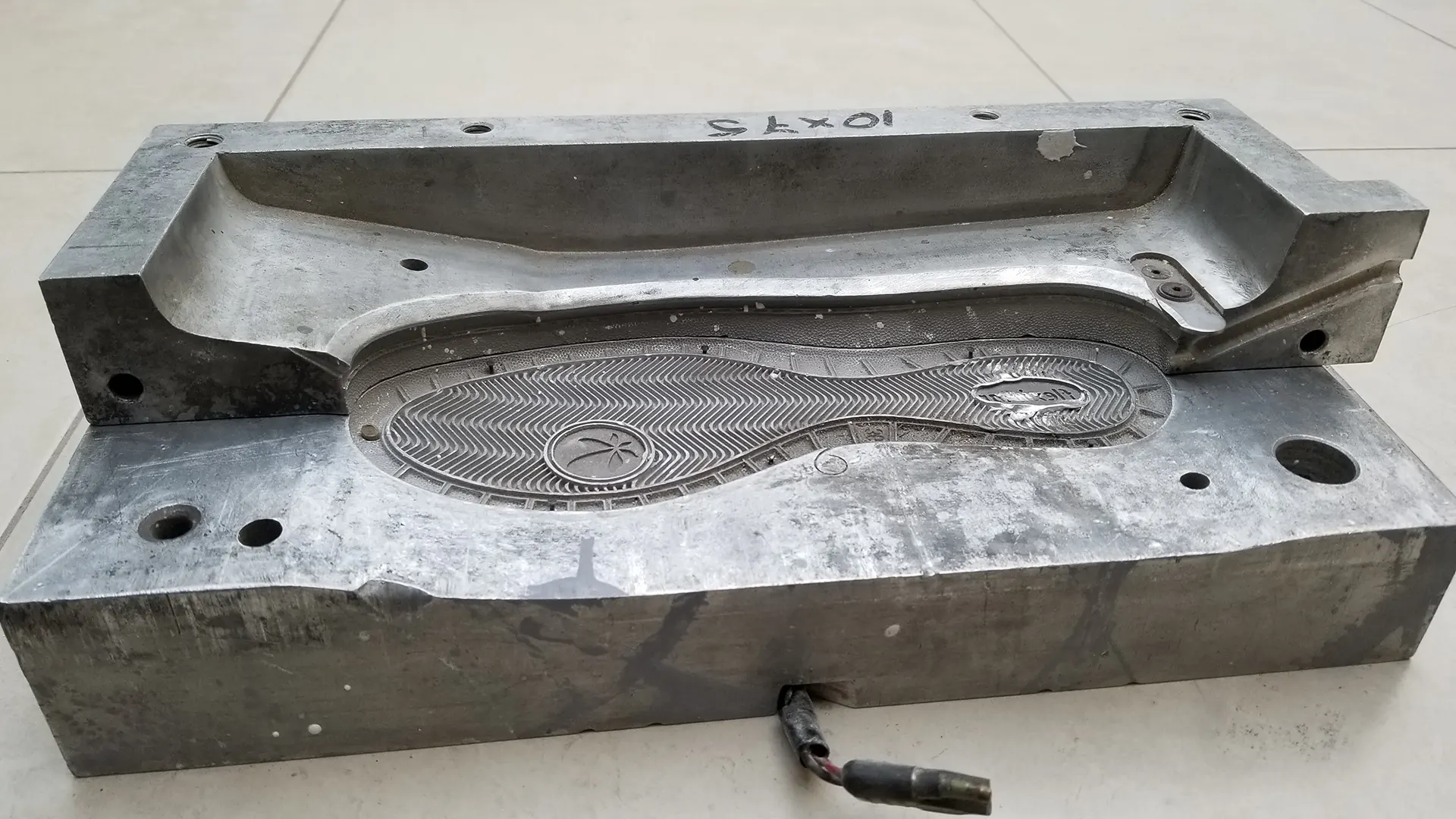
After reconstruction, the geometry was prepared for mold creation. This step translates the digital model into a manufacturing-ready form. First, we optimized the model for production constraints. Then, we defined separation logic and draft angles. As a result, the final model supports repeatable production. This process connects directly with our 3D printing and fabrication workflows.
Application in Product Development and Replacement
The reconstructed sole can be used for prototyping, replacement parts, or product analysis. Instead of redesigning from scratch, the geometry is derived from an existing reference. As a result, development time is reduced while maintaining compatibility. This approach is relevant not only for footwear, but also for broader scan-to-BIM logic, where existing conditions define the model. For similar cases, visit our contact page.
Project Summary
Object: sneaker sole with complex tread pattern and curved geometry.
Process: 3D scanning, surface reconstruction, and mold preparation.
Result: production-ready model for manufacturing and replication.
Project FAQ
Why is sneaker sole reverse engineering complex?
Because it combines overall shape with detailed tread patterns, both of which must be accurately reconstructed.
Can worn soles be used as a reference?
Yes. However, the geometry must be reconstructed to remove wear and restore the original design.
Is the tread pattern preserved during scanning?
Yes. High-resolution scanning allows capturing small features, which are then refined during reconstruction.
What is the final output used for?
The model is used for mold creation, prototyping, or reproduction of the sole geometry.