
Bio Parts \ Biomedical Reverse Engineering
This biomedical reverse engineering subproject focused on the digitization and reconstruction of organic and medical-form components using structured 3D capture, digital surface processing, and CAD-ready geometry. Working within the broader Reverse Engineering area at Ringstadhavna Bygg Design AS, the task included scanning reflective and anatomical shapes, evaluating surface continuity, and preparing models that could support documentation, redesign, and prototype verification. Unlike standard industrial parts, bio-inspired and medical forms often contain smooth transitions, complex curves, and sensitive dimensional zones. Therefore, the workflow had to balance geometric accuracy with clean digital reconstruction.
From Physical Bio Parts to Usable Digital Geometry
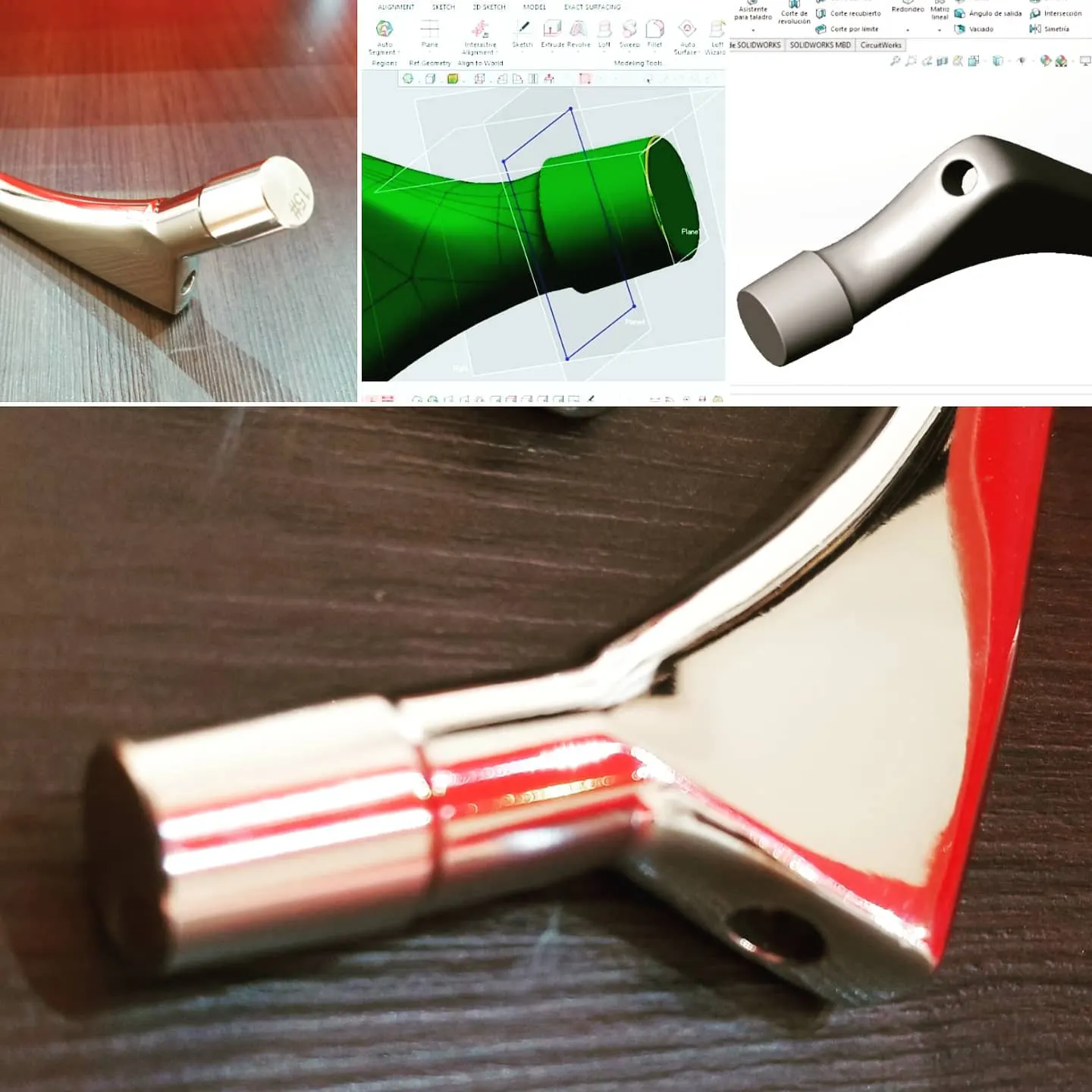
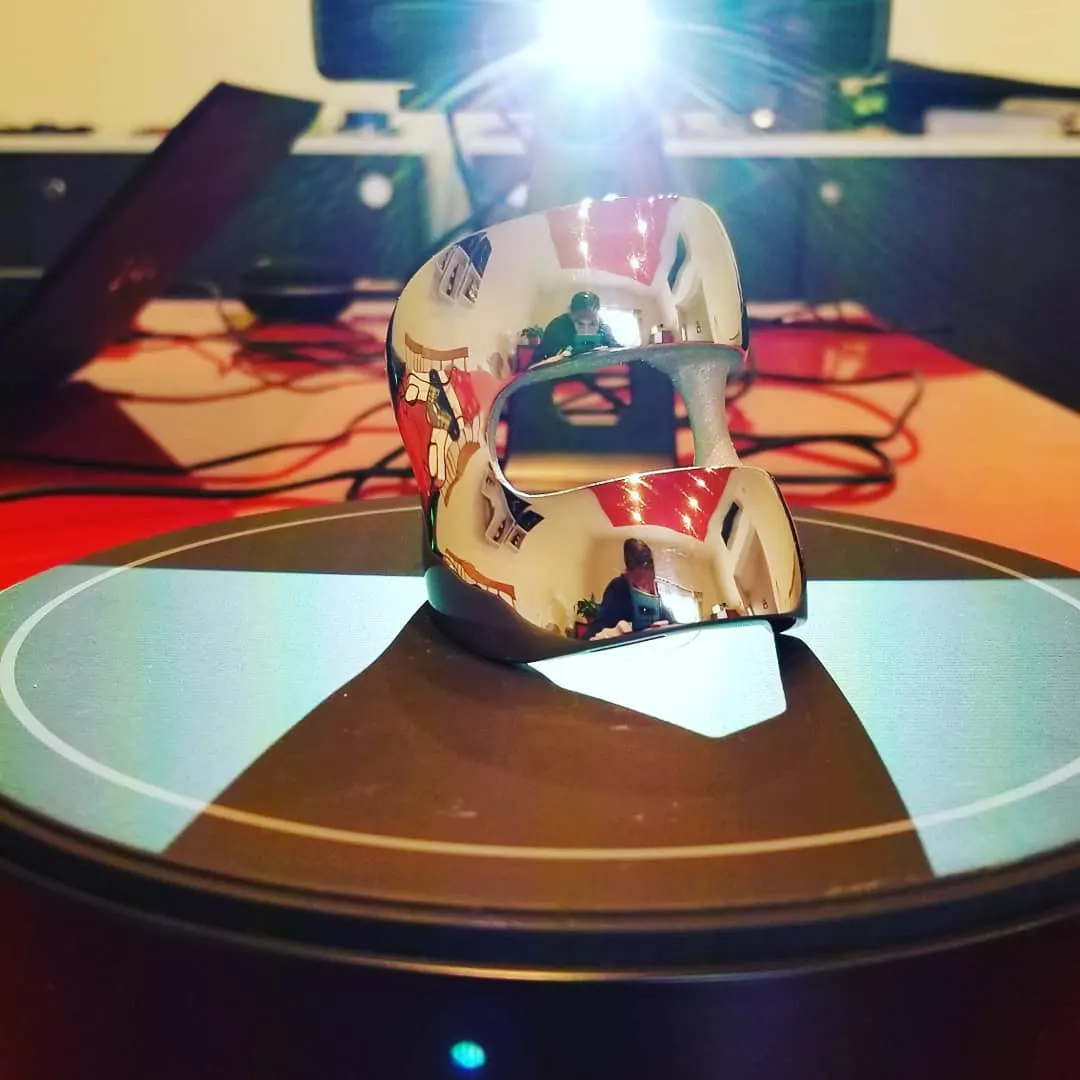
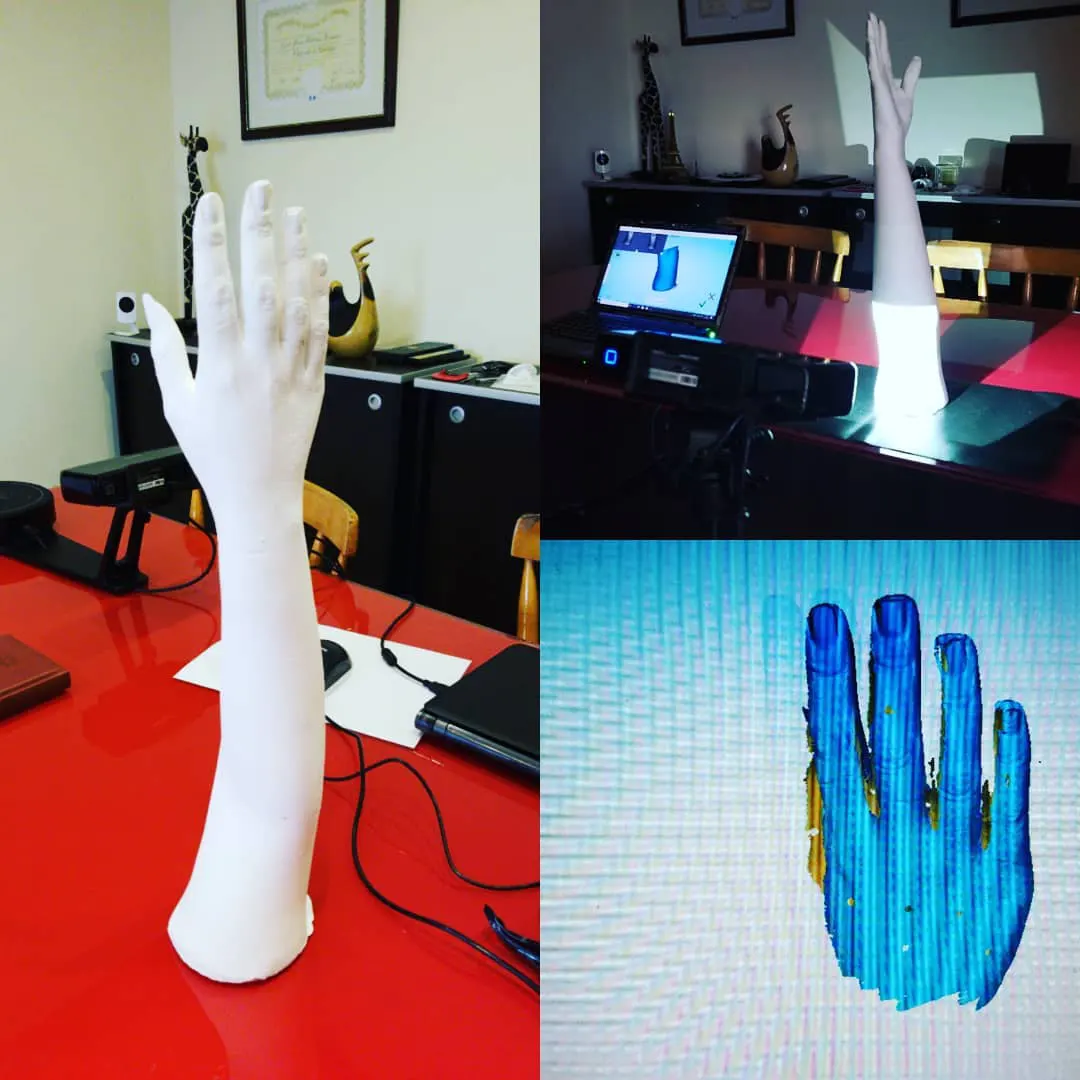
The project included several object types with different material and surface conditions. Some parts had polished finishes with strong reflections, while others had soft anatomical transitions that are difficult to describe using manual measurement alone. Using a precise capture workflow similar to the one behind our 3D scanning services, we first created a detailed digital record of the original shape. Next, the scan data was inspected to identify shadow zones, unstable edges, and areas that required controlled reconstruction. This step is essential in bio parts 3D scanning, because the goal is not only to “see” the object, but to convert it into geometry that can be reused in engineering software.
Key Technical Tasks
- Capture curved and organic surfaces with stable alignment.
- Reduce noise on reflective and difficult-to-read areas.
- Convert scan data into clear engineering reference geometry.
Biomedical Reverse Engineering Workflow for Medical and Organic Shapes
After scanning, the recorded data was processed into a mesh and reviewed for completeness. From there, the geometry was interpreted in a CAD workflow so the part could be reconstructed with cleaner surfaces and usable dimensional logic. This is where medical part reverse engineering differs from simple mesh export. Engineers, designers, and manufacturers usually need more than a visual replica. They need a model that supports editing, comparison, tolerance review, and in some cases physical reproduction. For that reason, this subproject combined mesh analysis with scan to CAD services and prototype-oriented preparation. Related workflows can also be seen across our project portfolio and our broader service offering.
Why This Matters
A reliable digital model helps teams evaluate shape continuity, reproduce discontinued parts, and test design changes before manufacturing. In biomedical and ergonomic applications, this is especially useful when the geometry must follow real-world contours instead of simple mechanical primitives. Moreover, when combined with 3D printing, the reconstructed file can be turned into a physical test piece for visual review, handling assessment, or form validation.
Practical Outcome of the Bio Parts Subproject
The result of this subproject was a documented digital workflow for capturing and rebuilding complex bio parts with enough precision for design interpretation and prototype preparation. The attached examples show both the capture stage and the model reconstruction stage, including anatomical reference scanning and a polished part processed into a controlled digital form. As a result, the project demonstrates how reverse engineering can support medical, ergonomic, and bio-inspired product development when conventional measurement is not sufficient. For companies looking to discuss a similar case, the next step is simple: review the requirements with our team through the contact page and define the needed accuracy, output format, and end use.
Project Summary
Scope: 3D scanning and reverse engineering of biomedical and bio-inspired parts.
Output: point cloud / mesh capture, cleaned digital geometry, CAD-ready reference surfaces, and prototype-ready model data.
Use case: documentation, redesign, fit evaluation, and preparation for physical reproduction or technical review.
Project FAQ
What is biomedical reverse engineering used for?
It is used to digitize complex anatomical or medical-form parts so they can be documented, redesigned, analyzed, or prepared for prototype production.
Can reflective parts be scanned for reverse engineering?
Yes, but reflective surfaces require controlled capture conditions and careful data cleaning before they can be converted into reliable engineering geometry.
Is mesh data enough for production work?
Not always. In many cases, teams need CAD-ready geometry rather than only a mesh, especially when the model must be edited or dimensionally reviewed.
Can the reconstructed model be 3D printed?
Yes. Once the geometry is validated, it can support a 3D printed medical prototype or other physical test part for evaluation.